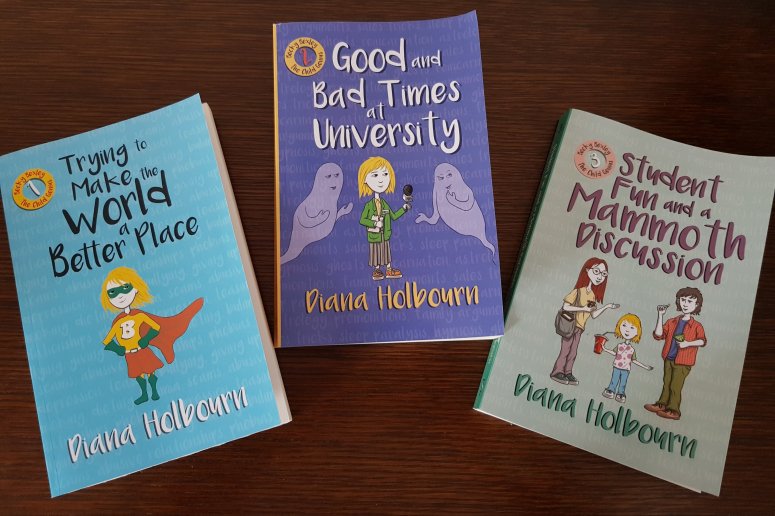
Becky Bexley: The Child Genius is a recently released trilogy of books by Diana Holbourn, a blind author who has attended short psychology courses and previously worked on a helpline. This ambitious trilogy takes self-help articles and frames them around a narrative, a unique and intriguing idea that makes the advice contained in the books more accessible to children and adolescents. Unfortunately, while I greatly admire the idea behind the trilogy, the execution leaves much to be desired.
There is a surprising amount of ableist language across the series, and the books are littered with typos and formatting errors. There were run-on sentences and the language was repetitive. I also couldn’t quite pinpoint who was intended to be the audience for these books; some of the topics were quite mature, but language such as “yucky” seems to be targeted towards very young readers. Perhaps the intent was to make mature concepts accessible to people who have difficulty reading, which I have to respect and so give Diana the benefit of the doubt on.
I cannot possibly say all that I want to say about these books and keep this blog post to a readable length, so what follows is merely the tip of the bad adv-iceberg.
Trying to Make the World a Better Place.
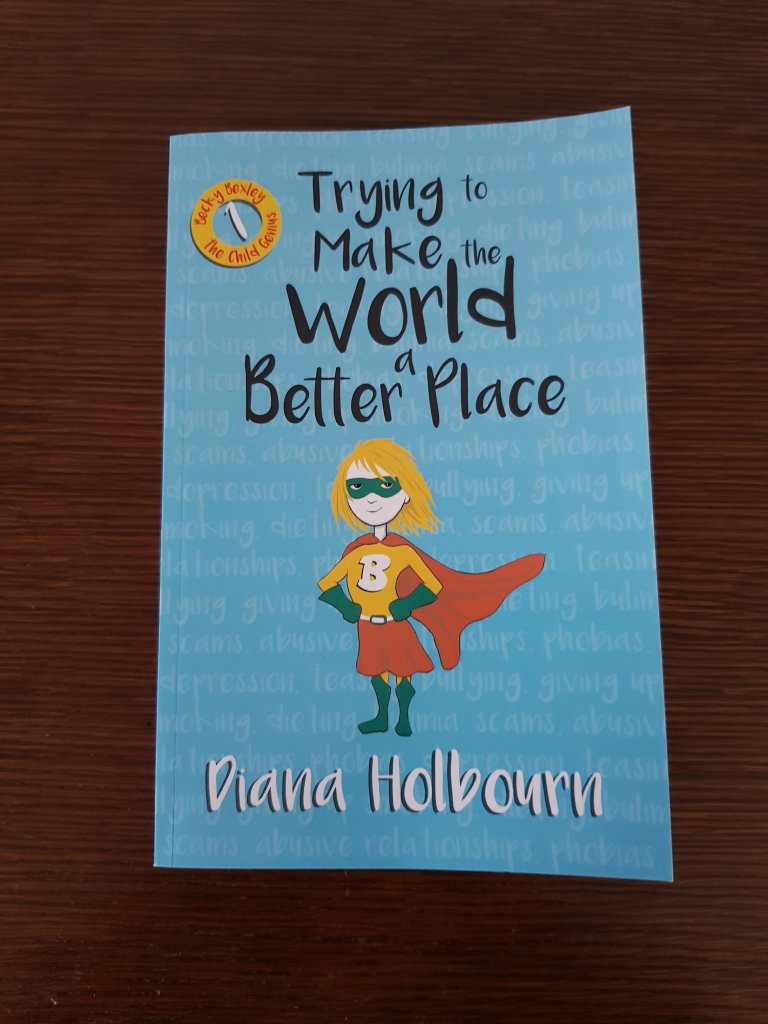
Trying to Make the World a Better Place is the first book in the trilogy, documenting ten-year old Becky’s adventures in school. Becky comes across as quite rude and obnoxious, perhaps intentionally, offering advice where it was not asked for and interfering in conversations she was not initially a part of. While some of the advice is good, most of it is sadly inaccurate or even potentially harmful.
My primary concern in the first book is the diet and nutrition advice on display. Bear in mind that these books are aimed at children, whose dietary requirements are significantly different from those of adults, and where eating habits during these formative years can have lifelong impacts on their health and wellbeing. Much of the advice is geared towards weight loss, with terms such as “fatty” and “flabby” commonly found among the text. Being encouraged to constantly snack on nothing but raw vegetables is not, in fact, healthy, and chewing more will not help someone who has developed the eating disorder Bulimia. The eating advice geared towards arthritis was at best dubious, and the link between Vitamin D and back pain is not as well-established as this book would make it seem.
Perhaps most shocking was the section on diet pills. I had assumed this section would have strongly advocated against the use of these medications, but instead Becky informs the reader about how you just have to research which diet pills come from reliable manufacturers. I was incensed.
Additional concerns with the first book came in the sections on depression and chronic pain, which seemed to start well but quickly veered into all-too-common attitudes that exercise, diet and thinking positively will cure all.
Good and Bad Times at University.
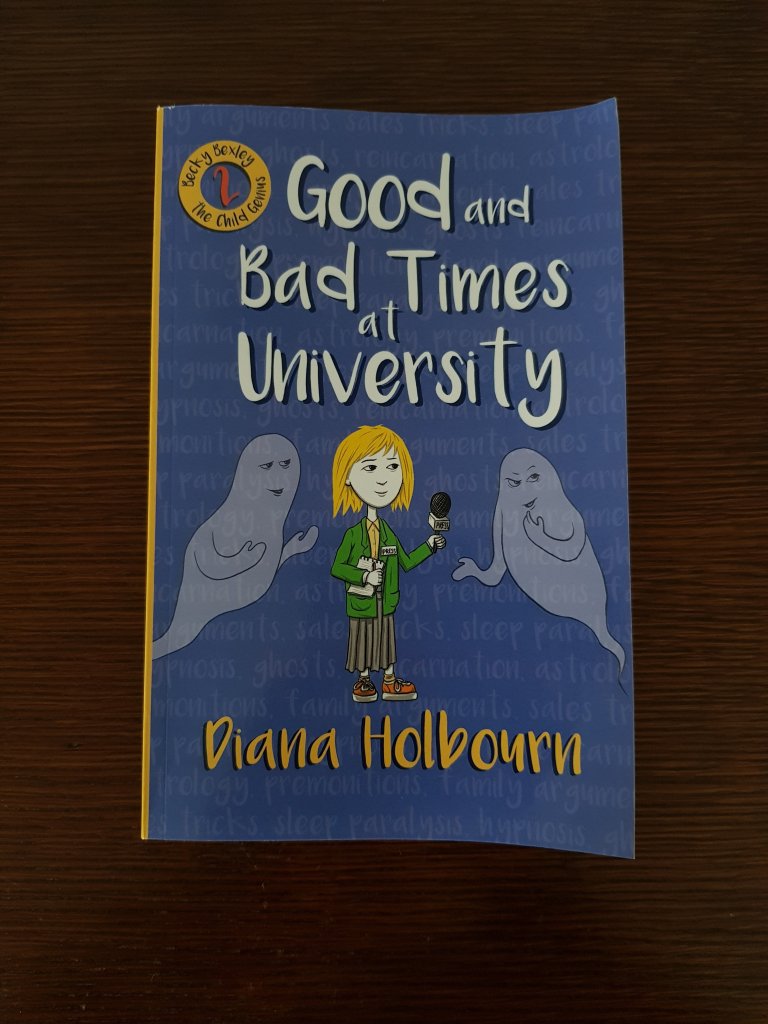
Good and Bad Times at University was the strongest book of the trilogy, with the best narrative elements of all three books, following ten-year-old Becky’s first semester at university studying psychology and media studies.
The book opens with Becky providing marital advice to a professor, something that cannot possibly come from a book and that she has no experience of. Indeed, marital counselling requires an additional qualification on top of the post-grad in counselling needed to practice as a therapist. I did also notice that in both examples Becky discussed of how to resolve a conflict, it was the woman who essentially had to concede to the husbands’ wants.
Becky then attends a church service, soaking up all the Christian practices without an ounce of criticism, despite spending a not insignificant number of pages prior being incredibly disrespectful of other religions. While the idea that a singular, omnipotent god impregnated a virgin to birth a flesh-and-blood son to sacrifice for all of humanity’s sins, honoured by consuming bread and wine, was perfectly reasonable, the notions of Karma and re-incarnation are openly mocked. Furthermore, Pagan spiritual practices are depicted as being the activities of fraudsters and cheats instead of a legitimate faith system.
The book goes on to make a joke of a Black man having the surname “White” which is racist, mocks a grown man for needing a bib while eating which is ableist, and touts the over-population myth.
The end of the book follows a narrative arc relating to the dangers of excessive drinking, which definitely offers the strongest advice of the books, but amusingly felt as heavy handed as the infamous “Beer Bad” episode of Buffy the Vampire Slayer.
Student Fun and a Mammoth Discussion.
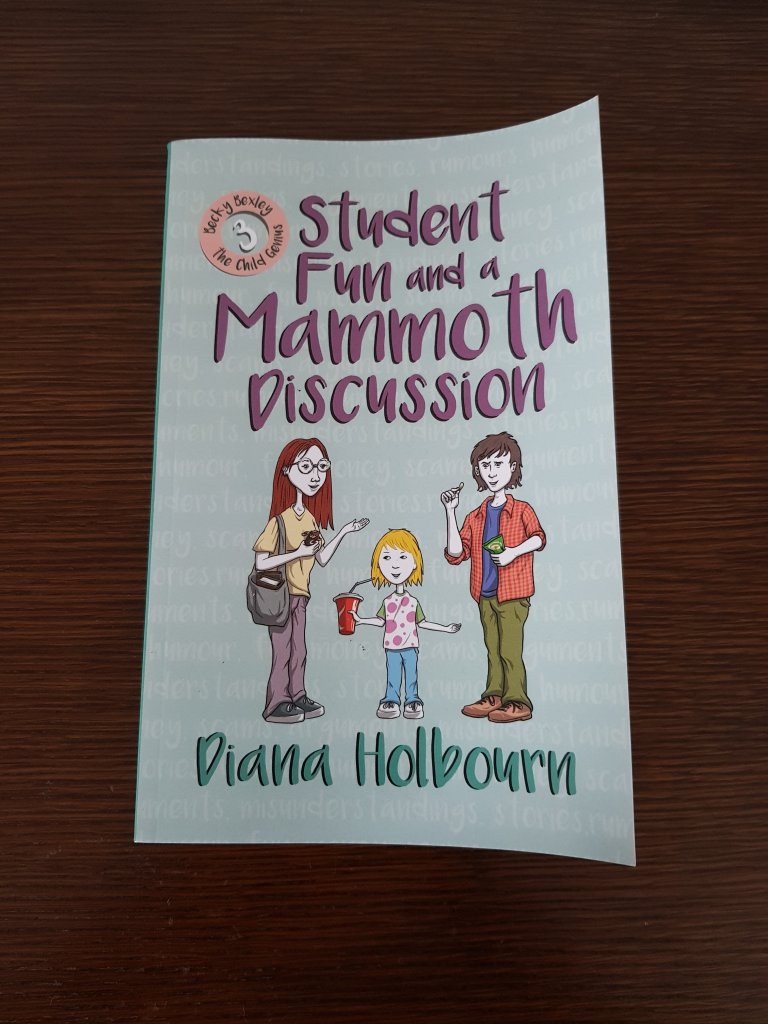
Student Fun and a Mammoth Discussion takes place over an extended lunch break, and in my opinion is the weakest in the trilogy due to its distinct lack of narrative and severe pacing issues.
Weight loss is once again brought up, with someone achieving a Body Mass Index that classified them as underweight being described as “impressive”. The discussion takes a sharp turn into the Cuban Missile Crisis, with time taken out to mock the name “Fidel” for sounding like “infidelity”.
The topic then turns to that of transgender people. Trans people are intentionally misgendered when discussing their life prior to transition, only those who have medically transitioned are including in the discussion, and the trans woman is described as having sexually harassed women when she “was a man”. I had to take a break from reading at this point lest I explode.
The aimless conversation then turns to the gender pay gap. The reasons for the gender pay gap are discussed in depth, including a claim that illegally refusing to hire someone who could get pregnant to avoid the need to provide maternity pay and cover was perfectly understandable on the part of the employer.
Furthermore, towards the end of the book the conversation discusses how poverty is at least partially due to poor decision making. I admit that I stopped to check that Suella Braverman hadn’t written these books under a pseudonym.
***
Shortly put, these books are terrible. I feel awful but there really is no other way to put it. They are written almost as poorly as they are researched, which is quite the achievement.
Perhaps the biggest mistake of all, however, was not made by Diana but by the PR firm who decided to send these books to a “woke”, non-binary Pagan with a degree in nutrition who is married to qualified therapist. With negative stereotypes about people who listen to heavy metal and play video games added in for good measure, they could not possibly have sent these books to a worse person.
Now all that is left to do is decide what to do with these books. I don’t want to keep them, I don’t want to donate them to charity lest someone else have to read them, and using them as toilet paper would almost certainly result in unspeakable papercuts…
 Diary of a Disabled Person.